

Not the noisy, fleeting kind, but a slow, heavy, consequential political thundercloud that carries within it history, memory, grievance, ambition & the eternal Nigerian argument between merit & justice.
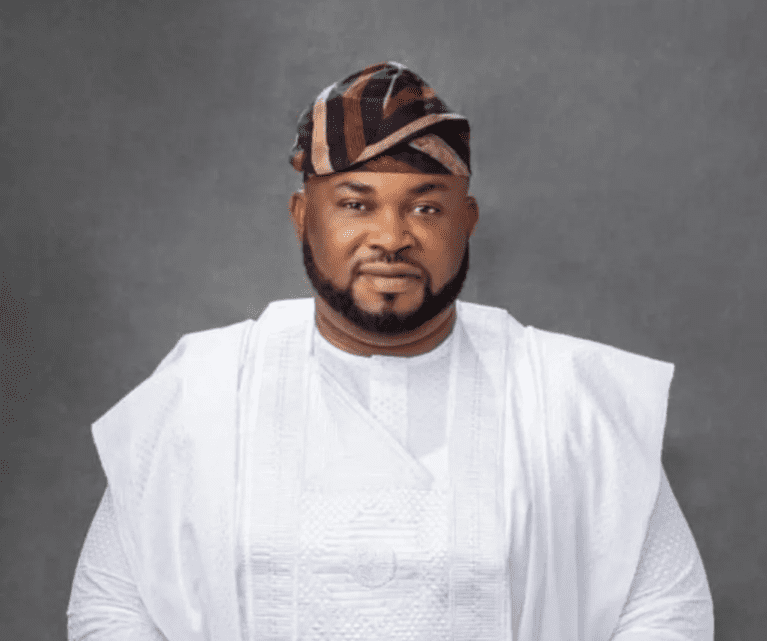
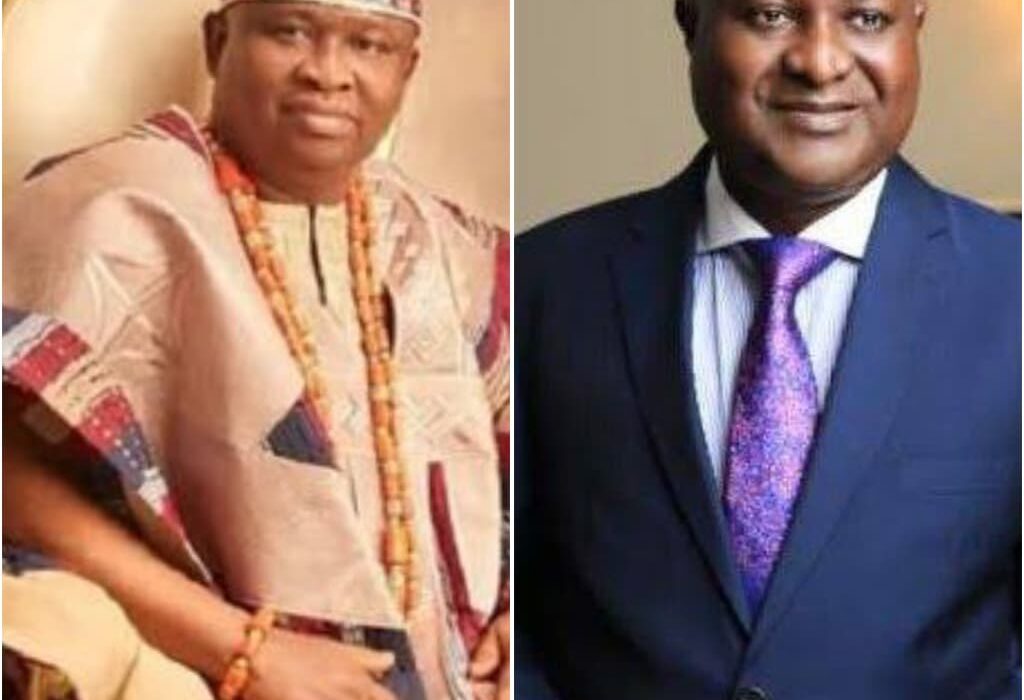
On one side stands Senator Olamilekan Solomon Adeola, the irrepressible Yayi, battle-hardened, grassroots-forged, politically electric.
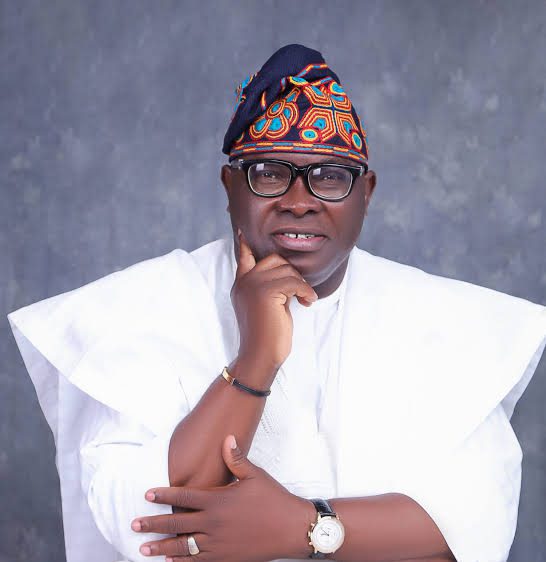
On the other, the urbane, boardroom-bred technocrat, Tunde Lemo, calm, cerebral, establishment-tested.
This is not merely about 2 men.
It is about 2 traditions.
2 pathways to power.
And one long-standing question Ogun State has repeatedly postponed but can no longer comfortably avoid.
Who really deserves the keys to the Oke-Mosan kingdom in 2027?
To understand the emotional voltage in this looming duel, one must take a hard look at history, not sentiment.
Since the old Ogun State was created in 1976, power has moved, almost ritualistically, between Ogun Central & Ogun East.
Chief Olabisi Onabanjo (1979-1983), Ogun East, Ijebu.
Aremo Olusegun Osoba (1999-2003, 2011-2019 in effect through his political lineage & structure, though he himself governed 1999-2003 & 2011-2015 via influence), Ogun Central, Egba.
Otunba Gbenga Daniel (2003-2011), Ogun East, (Sagamu) Ijebu.
Senator Ibikunle Amosun (2011-2019), Ogun Central, Egba.
Prince Dapo Abiodun (2019 till date), Ogun East, (Iperu) Ijebu-Remo axis.
Even when one stretches back to military administrators who governed the old Western State/Ogun axis, the pattern of dominance from what is today Ogun East & Ogun Central remains striking. Names change, uniforms or agbadas change, but the geographic centres of power hardly do.
And Ogun West?
Yewa/Awori land?
Always the bridesmaid. Never the bride.
No civilian governor.
No military governor.
No accidental governor.
None.
For nearly 5 decades.
Yet Ogun West is not a fringe outpost. It is economically strategic, border-defining, industrially vibrant, demographically significant. From Ado-Odo/Ota’s manufacturing belt to the vast agrarian stretches of Yewa North & South, it is a pillar of the state’s revenue & labour force.
Still, when the crown is passed, it skips them.
And then comes the convenient refrain at intervals:
“After all, Egba & Egbado are the same stock.”
A soothing line, politically useful, historically contestable, & to many in Ogun West, painfully dismissive of a distinct identity & aspiration. When it suits power arithmetic, the sameness is preached. When offices are shared, the difference quietly reappears.
This is the wound Senator Yayi’s candidacy presses a firm finger upon.
Yayi is not just running as an individual; he is, whether by design or destiny, the most potent symbol yet of Ogun West’s long-deferred turn.
His political journey is anything but ornamental. 8 years in the Lagos State House of Assembly. A term in the House of Representatives. 2 full terms in the Senate representing Lagos West. Now Senator for Ogun West. At every stop, he has built networks, delivered visible projects, & cultivated a reputation for tireless constituency engagement.
He is loud where others are polite.
Present where others are distant.
Organised where others are theoretical.
He has structure. Real, ward-level, vote-producing structure.
He has resources.
He has national connections & crucially, an organic mass appeal that feeds on the narrative of justice for Ogun West.
Against him rises Tunde Lemo, a different kind of colossus.
If Yayi is the consummate political field marshal, Lemo is the grandmaster strategist from the world of finance & regulation.
1st class in Accounting from UNN. Fellow of ICAN. A “bankers’ banker” in the truest sense. Arthur Andersen pedigree. Young MD/CEO of Wema Bank. Deputy Governor of the Central Bank of Nigeria at a relatively youthful age.
Chairman of the Abuja Securities & Commodities Exchange Plc. Former head of FERMA. A towering presence in Nigeria’s financial & corporate ecosystem, with deep ties to major banking & fintech successes.
Where Yayi’s strength is the marketplace & the motor park, Lemo’s is the boardroom & the balance sheet.
He speaks the language of investors, regulators & global capital. To many in Ogun Central & among elite stakeholders, he represents technocratic stability, administrative discipline & the promise of running Ogun like a tightly managed enterprise.
If the election were a job interview for a chief executive, his CV would silence the room.
But elections are rarely decided only by CVs.
They are decided by stories people believe about themselves.
Yayi’s story says:
“For 50 years, you have waited. This is your time.”
Lemo’s story says:
“In uncertain times, choose proven managerial excellence.”
One is powered by historical redress.
The other by institutional reassurance.
One rides a wave of populist energy & rotational justice.
The other floats on credibility, competence & establishment comfort.
There is also the delicate arithmetic of Ogun’s internal politics.
Ogun Central can point to illustrious sons who have governed: Osoba & Amosun.
Ogun East can point to Onabanjo, Daniel & Abiodun.
Ogun West can only point to potential.
That asymmetry is not theoretical; it is visceral.
If 2027 becomes a referendum on fairness between the 3 senatorial districts, the moral pendulum swings heavily towards Ogun West & therefore towards Yayi.
If, however, the contest is successfully reframed as a choice of who can best steward Ogun through economic complexity, attract investment & impose fiscal rigour, Lemo’s technocratic aura becomes magnetic.
There is an added layer: structure versus fresh coalition.
Yayi already possesses a formidable political machine & a proven ability to win elections. He energises crowds & turns sentiment into votes.
Lemo would likely depend on an elite-driven, cross-district coalition: traditional institutions, business leaders, policy influencers & party powerbrokers rallying around the argument of merit over rotation.
Thus the coming clash is not simply Yewa versus Egba.
It is machine versus merit.
Momentum versus method.
Historic grievance versus technocratic promise.
Can Tunde Lemo blunt the emotional surge of Ogun West’s long exclusion?
Can Yayi convert regional justice into statewide consensus?
That is the crux.
If Ogun voters decide that the unwritten but observable rotation between Central & East must finally be broken in favour of West, Yayi stands at the gates of history.
If they decide that pedigree, financial expertise & cross-regional acceptability should trump zoning sentiment, Lemo becomes the establishment’s elegant answer to the Yayi phenomenon.
Either way, 2027 is shaping up not as a routine succession but as a defining moment in Ogun’s political evolution.
For the 1st time in decades, the state may have to choose explicitly between continuing an old pattern & consciously correcting it.
Between rewarding experience in politics & rewarding experience in governance systems.
Between the cry of “our turn at last” & the call of “the best hands for the job”.
When that choice is finally made, it will not just produce a governor.
It will write a long-overdue footnote, or a bold new chapter, in the unfinished story of Ogun West.